I Audited My Bathroom Shelf and Found a Sephora Receipt With Feelings
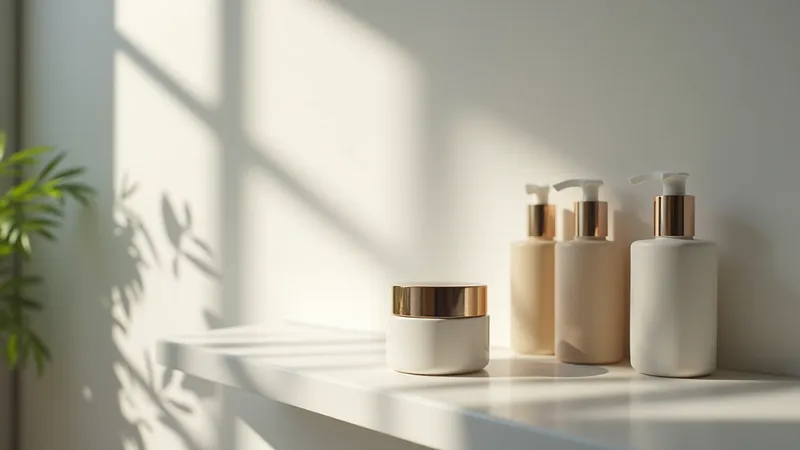
Photo: minimal skincare routine few products bathroom shelf natural light, via static.wixstatic.com
Last spring, I packed for two weeks in California with one carry-on. You can read about the clothes elsewhere on this site — the suitcase math is its own saga. What I didn't write about was the beauty crisis that happened in the days before departure.
Because here's what packing light really exposes: your skincare routine is a lie.
The Shelf of Shame
Back home, my bathroom counter held — and I'm being fully honest with you, because that's the deal — nine steps' worth of products. Double cleanser and single cleanser. A hydrating toner and an exfoliating toner. Two serums that did vaguely similar things. An essence I bought because a video told me to. A moisturizer for day, a different moisturizer for night, a sleeping mask, and an eye cream whose main job was making me feel responsible.
Total value, if I'd kept the receipts: somewhere north of $600. Some of it was barely used. Some of it was never used. All of it made me feel vaguely behind, like there was a version of me with better skin living one more product away.
For the trip, I gave myself a hard rule: one quart-size bag, that's it. I fit four items. And here's the part that still stings — my skin was fine. Actually fine. Maybe better than fine, which was a genuinely humbling thing to admit at a hotel mirror in Santa Barbara.
What the Beauty Industry Doesn't Want You to Count
Let's talk about why that shelf got so crowded in the first place, because I don't think it was entirely my fault — and I don't think it's entirely yours either.
The skincare industry runs on a simple engine: make you believe your face is a problem to be solved, then sell you the solution in steps. Ten-step routines didn't come from dermatology. They came from marketing, repackaged and sold to Americans as self-care. And the sneakiest part? The guilt is the product. Every bottle on my shelf wasn't skincare — it was a small monthly subscription to feeling like I wasn't doing enough.
Some of it was even dressed up as virtue. "Investment in yourself." "Non-negotiable." Meanwhile, my dermatologist — an actual medical professional — once looked at my routine list, laughed, and said, "You know half of these cancel each other out, right?"
The Audit: Who Earned Their Counter Space
When I got home, I did what any recovering product hoarder does: I put everything in a box and only allowed items back on the counter when I genuinely missed them. Six weeks later, here's the scoreboard.
Kept, unconditionally:
- A gentle cleanser. Morning and night, non-negotiable, boring, perfect.
- Sunscreen, SPF 30+. The single most effective anti-aging product ever made, and it's not close. If you keep one thing, keep this.
- One retinoid at night. The only other category with serious evidence behind it. Slow, steady, unglamorous.
- One moisturizer. Just one. It works for both day and night, and no, my face has not fallen off.
Kept, conditionally:
- A vitamin C serum. Nice in the morning, but I'd survive without it. It stays because I like the ritual, not because I'm convinced.
Exiled to the box:
- The essence. The second toner. The sleeping mask. The eye cream (my regular moisturizer, it turns out, also works under eyes — who knew). The exfoliating toner that was quietly fighting my retinoid and losing.
The Routine That Actually Stuck
So here it is. My entire honest-to-goodness routine, in full:
Morning: cleanser, moisturizer, sunscreen.
Evening: cleanser, retinoid (or just moisturizer on off-nights), moisturizer.
That's it. Five products total, three at a time. My skin is calmer, my counter is visible for the first time in two years, and I'm saving roughly $50 a month — which, at current prices, is a very good brunch.
A Word Before You Toss Everything
This isn't an argument against enjoying skincare. If a ten-step ritual genuinely brings you joy, fill your boots — rituals matter, and there's real comfort in them. This is an argument against guilt dressed up as glow. If a product isn't doing anything, if it's on your shelf because a stranger on the internet made you feel behind, it doesn't get to live there anymore.
Good skin doesn't require a haul. It requires sunscreen, patience, and the courage to admit that the bottle you bought at 11 p.m. after a rough Tuesday was never really about your face.