I Wore Only My Forgotten Jewelry for a Month — Here's What Earned Its Way Back
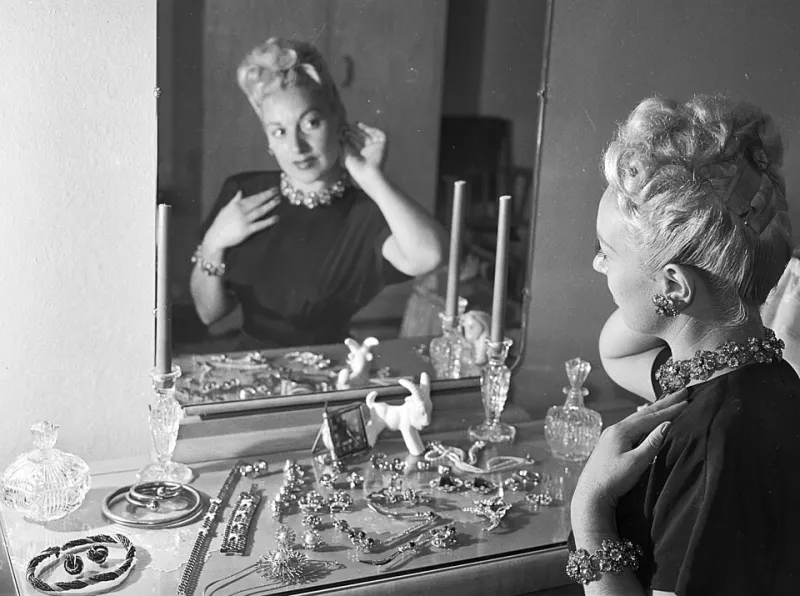
Photo: Unknown authorUnknown author, Public domain, via Wikimedia Commons
Every jewelry box has a geography. There's the top tray — the daily rotation, the pieces you could find blindfolded at 7 a.m. — and then there's the back country. The tangled chain graveyard. The gift pouches from birthdays you barely remember. The single earring whose twin vanished somewhere between a Nashville bachelorette party and a TSA bin.
I'd been walking past that back country for years. So last month, I made a deal with myself: no everyday studs, no signature gold chain, no cheating. For thirty days, I would wear only the jewelry I'd forgotten I owned. Every piece had to earn its way back into rotation or admit it was just taking up drawer space.
Here's how it went.
Week One: The Reckoning
The first few days were humbling. I dumped the entire drawer onto my dresser and sorted everything into three piles: keep and wear, repair, and the honesty pile (we'll get to that one).
The keep-and-wear pile was bigger than I expected — fourteen pieces, which felt embarrassing until I remembered I once read that the average American woman owns jewelry she hasn't touched in three years. I was apparently very average.
Week one's standouts surprised me. A chunky resin cuff I bought at a craft fair in Asheville three summers ago suddenly made my entire denim-and-tee uniform look intentional. A pair of tiny turquoise studs — a gift from my aunt — turned out to be the perfect neutral that my gold hoops never were. It turns out I didn't need new jewelry. I needed to see what I had.
The Honesty Pile
Not everything got a redemption arc. By week two, I'd developed a simple test: if I put a piece on and spent the day fidgeting with it, adjusting it, or forgetting it was there in a bad way, it went to the honesty pile.
The honesty pile is where jewelry goes to be told the truth. The statement necklace from a work phase I've outgrown. The earrings that only matched one dress I no longer own. The two rings I bought during a sale-craze afternoon because they were forty percent off — not because I ever wanted to look at my hand and see them.
I photographed everything and sent it to my little cousins and a couple of friends before donating the rest. Jewelry is personal; it deserves a second life with someone who'll actually reach for it, not a sad ziplock in a donation bin.
What Made the Cut
By the end of the month, five pieces earned permanent promotion to the top tray:
- The turquoise studs. Small, colorful, goes with everything from a blazer to a bathing suit. Why was this ever in the back?
- A thin silver bangle my grandmother wore for decades. Sentimental, yes — but also genuinely the finishing touch my fall layers were missing.
- The resin cuff. Proof that a $12 craft fair impulse can outperform a $120 boutique purchase.
- A pearl-adjacent huggie pair (fake, delightfully so) that dress up a white tee like nothing else.
- A pendant necklace I'd written off as too delicate. Turns out layering it with my daily chain fixes that entirely.
What the Experiment Taught Me About Building a Jewelry Capsule
If you want to try your own rotation — and I genuinely think you should, because it costs nothing — here's the framework I landed on:
1. Pull everything out. All of it. You cannot audit what you cannot see. Spread it on a towel, sort pairs from singles, untangle what's salvageable.
2. Wear the forgotten pieces in real life, not in front of a mirror. A necklace can look gorgeous on a velvet bust and still catch on every sweater you own. Only a full day of wear tells the truth.
3. Notice what you reach for when it's not an option. Halfway through the month, I realized I kept touching my bare earlobes wanting a pop of color — which told me my capsule was missing small colored studs, not another gold hoop.
4. Set a number. Mine ended up being twelve: enough variety that I never feel stuck, few enough that everything actually gets worn. If a thirteenth piece comes in, a thirteenth piece goes out.
5. Repair before you replace. A ten-dollar trip to the local jeweler resurrected two pieces I'd have paid sixty to replace. The clasp is almost never the problem you think it is.
The Drawer After
The back country of my jewelry box is now basically empty, and the top tray is a mix of old faithfuls and newly promoted underdogs. Getting dressed takes less time. My outfits feel more personal — like they were styled by someone who actually knows me, not by whatever the algorithm pushed last week.
The best part? The one single earring I couldn't part with — the Nashville twin-loss casualty — is becoming a pendant next month. Sometimes the forgotten stuff just needs a second chance in a different form.
Your next favorite piece is already in your drawer. It's just waiting for you to move it to the front.